
The Number One Question We Get About Kitchen Remodels
If you're a homeowner in Coronado thinking about remodeling your kitchen, chances are you've already asked yourself: How long is this actually going to take? It's the most common question we hear at Anchor General Contractors, and for good reason. Your kitchen is the heart of your home, and living without it — even temporarily — affects your entire daily routine.
The honest answer is that every project is different. But that doesn't mean you have to go in blind. Understanding the typical phases of a kitchen remodel and how long each one takes will help you plan meals, set expectations with your family, and avoid the frustration that comes from uncertainty.
Here's a realistic, phase-by-phase breakdown of what a kitchen remodel timeline looks like from start to finish.
Phase 1: Design and Planning (2–6 Weeks)
Before anyone picks up a hammer, there's a significant amount of planning that needs to happen. This phase includes:
- Initial consultations and measurements
- Design development and layout decisions
- Material selections — cabinets, countertops, tile, fixtures, and appliances
- Permit applications (if structural changes or electrical and plumbing work are involved)
For many Coronado homeowners, this is actually the longest phase — not because it's complicated, but because decisions take time. Choosing between quartz and granite, deciding on a cabinet style, or finalizing a layout that works for how you actually cook and entertain requires thought.
Pro tip: Don't rush this phase. Good planning prevents costly changes later. We walk our clients through every decision so nothing gets overlooked before construction begins.
Phase 2: Permitting (1–3 Weeks)
Depending on the scope of your remodel, you may need permits from the City of Coronado. If your project involves moving walls, relocating plumbing, upgrading electrical panels, or adding square footage, permits are required. Even some cosmetic remodels that involve new gas lines or ventilation need sign-off.
Permit timelines vary, but in our experience working throughout Coronado and the surrounding areas, most residential kitchen permits are processed within one to three weeks. Your contractor should handle this process for you — it's part of the job.
Phase 3: Demolition (2–5 Days)
This is the part that feels the most dramatic. Old cabinets come out, flooring gets pulled up, and the space is stripped down to its bones. Demolition for a standard kitchen remodel typically takes just a few days, though larger kitchens or those with unexpected issues — like water damage hidden behind walls — can take a bit longer.
During this phase, dust and noise are unavoidable. We always set up containment barriers to keep the mess from spreading through the rest of your home, and we communicate daily so you know exactly what's happening.
Phase 4: Rough-In Work (1–2 Weeks)
Once the old kitchen is cleared out, the behind-the-scenes work begins. This includes:
- Electrical wiring for new outlets, lighting, and appliances
- Plumbing rough-in for sinks, dishwashers, and gas lines
- HVAC adjustments if needed
- Framing for any structural changes
This phase is critical because it sets the foundation for everything that follows. Inspections are typically required at this stage before walls can be closed up. It's not the most glamorous part of the process, but it's one of the most important.
Phase 5: Drywall, Painting, and Flooring (1–2 Weeks)
With the rough-in work approved, the space starts to take shape. Drywall is hung and finished, paint goes on the walls and ceiling, and new flooring is installed. This is the phase where the kitchen begins to look like a kitchen again, and most homeowners start to get genuinely excited.
If you've chosen tile flooring or a detailed backsplash pattern, this phase may take a little longer. Hardwood flooring that needs to be finished on-site also adds a few extra days for drying and curing.
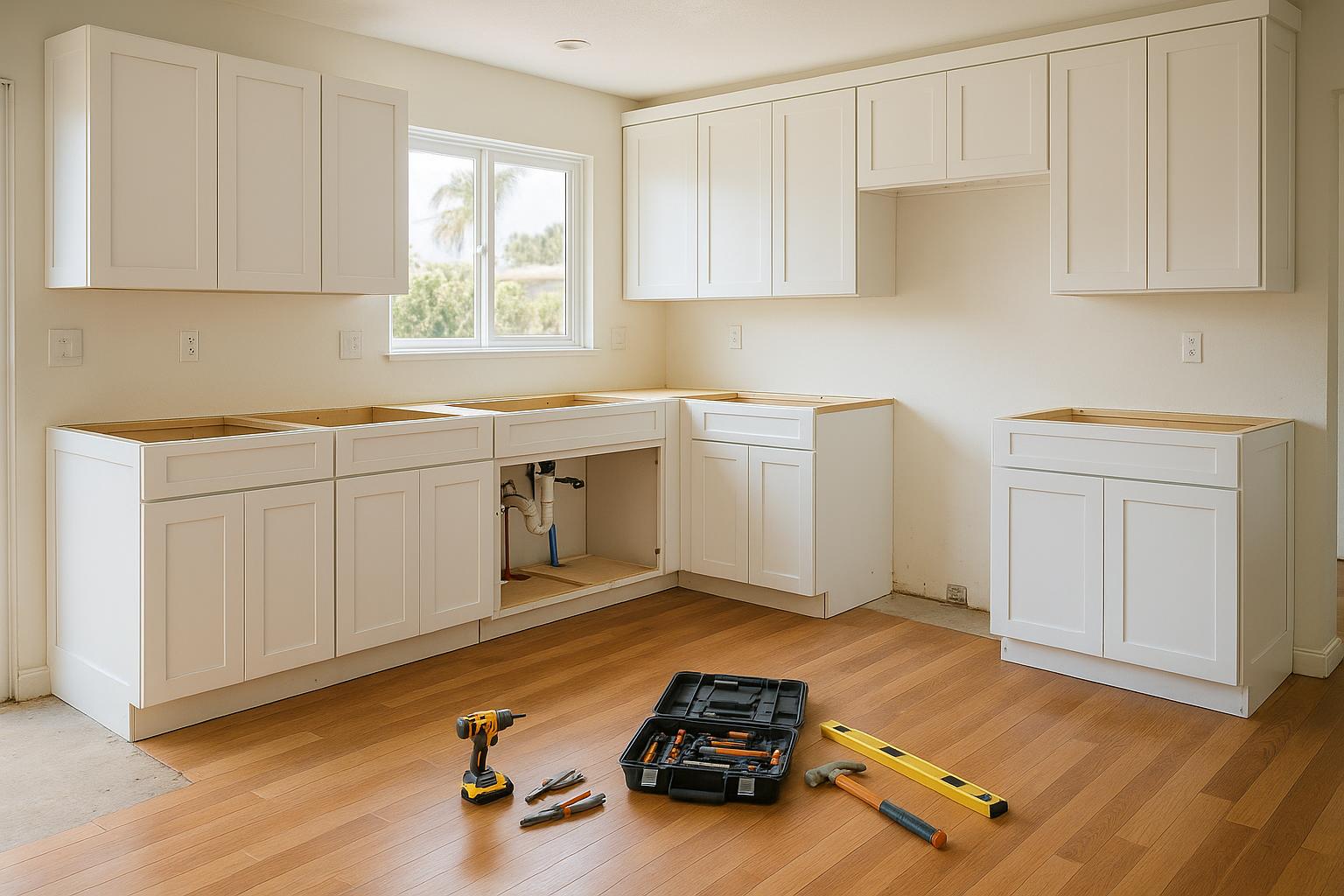
Phase 6: Cabinets and Countertops (1–2 Weeks)
Cabinet installation is a turning point in the project. Once the cabinets are in, the countertop fabricator comes out to take final measurements — this is called templating. Custom countertops are then fabricated and installed, usually within one to two weeks after templating.
Important note: Countertop lead times can vary significantly depending on the material and supplier. If you've chosen a natural stone slab or a specialty material, ordering early in the planning phase can prevent delays down the line.
Phase 7: Fixtures, Appliances, and Finishing Touches (3–5 Days)
The final phase brings everything together. This includes:
- Sink and faucet installation
- Appliance hookups
- Backsplash tile installation
- Cabinet hardware
- Light fixtures and under-cabinet lighting
- Final trim work and touch-up painting
This is the most satisfying part of the process for everyone involved. Each small detail adds up, and the kitchen you've been imagining finally becomes real.
So How Long Does It All Take?
For a typical mid-range to high-end kitchen remodel in Coronado, homeowners should plan for 8 to 14 weeks of construction time, plus the design and planning phase beforehand. Smaller cosmetic updates — like refacing cabinets and swapping countertops — can be completed in as little as three to four weeks. Larger projects that involve structural changes or additions may take longer.
Here are a few factors that can extend the timeline:
- Custom materials with long lead times — Some cabinetry and specialty tiles can take 6–10 weeks to arrive after ordering.
- Unexpected discoveries during demolition — Older homes in Coronado sometimes reveal outdated plumbing, knob-and-tube wiring, or water damage that needs to be addressed.
- Change orders — Deciding to move a window or upgrade to a different layout mid-project adds time and cost.
- Permit delays — While uncommon, inspection scheduling can occasionally push the timeline.
How to Keep Your Kitchen Remodel on Track
The biggest thing homeowners can do to keep a project on schedule is to make decisions early and stick with them. Delayed material selections and mid-project changes are the two most common causes of timeline extensions.
Working with a contractor who communicates clearly also makes a huge difference. At Anchor General Contractors, we provide our clients with a detailed project schedule before work begins and keep them updated throughout every phase. No guessing, no surprises.
Ready to Start Planning?
If you're considering a kitchen remodel in Coronado or the surrounding San Diego communities, we'd love to help you map out a realistic plan and timeline. Every home is different, and we tailor our approach to fit your space, your goals, and your schedule. Reach out to Anchor General Contractors for a consultation — we'll walk you through exactly what to expect, start to finish.